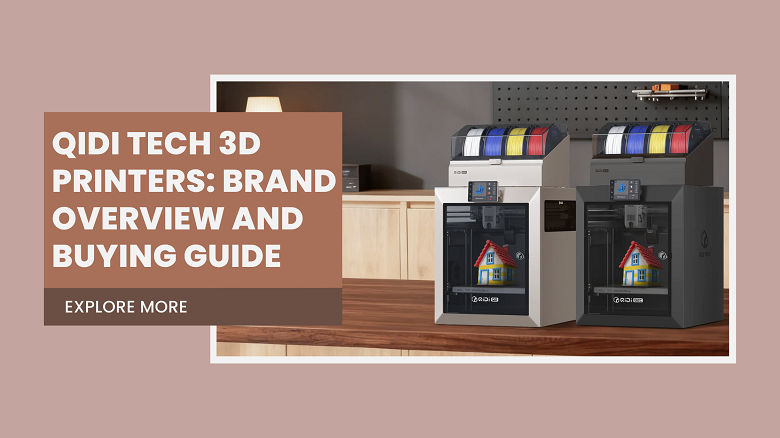
QIDI Tech has established itself as a practical option for people seeking enclosed FDM 3D printers that go beyond basic PLA printing. Founded in 2014, the company focuses on machines with reliable temperature control, support for engineering filaments, and relatively user-friendly operation. If you are comparing printers for a home workshop, classroom, or small studio in the United States, United Kingdom, or Europe, understanding the brand and its main model families helps you decide whether a QIDI machine fits your needs.

This guide covers the company background, key design features, popular model series (including the frequently searched X-Max, X-Plus, X-CF Pro, and i-Fast lines), material compatibility, software, and practical buying points. Information is drawn from publicly available product characteristics; check the official store for the latest specifications and availability.
Who Is QIDI Tech?
QIDI Tech (also referred to as QIDI Technology or Qidi Tech) is a Chinese manufacturer based in the Zhejiang region. It designs, develops, and produces FDM 3D printers, filaments, and accessories, operating its own research, development, and production facilities. From early on, the company emphasized enclosed printers rather than open-frame designs. This approach supports more consistent chamber temperatures and improves success rates with materials that tend to warp.
Products commonly carry CE, FCC, RoHS, and MET safety certifications. Official product information, support resources, and current inventory are available at https://qidi3d.com/.
Design Features Shared Across the Lineup
Most recent and popular QIDI FDM printers share several practical traits:
- Fully or semi-enclosed build chambers that help maintain stable temperatures.
- Hotends capable of elevated temperatures (often in the 300–370 °C range depending on model and generation) paired with heated beds that reach 100–120 °C.
- CoreXY motion systems on many mid- and higher-end machines for improved speed potential and rigidity.
- Direct-drive extruders that handle flexible and abrasive filaments more reliably than many Bowden setups.
- Automatic bed leveling, filament run-out sensors, and color touchscreen interfaces.
- Support for a wide material range when the correct nozzle, temperature settings, and drying practices are used.
These characteristics make the printers suitable for users who want functional parts in ABS, ASA, nylon, polycarbonate, or carbon-fiber composites without stepping up to fully industrial equipment.
Popular Model Families
X Series: X-Max, X-Plus, and X-CF Pro
The X series accounts for a large portion of search interest.
- QIDI X-Max / X-Max 3 and related variants – Larger build volumes (often exceeding 300 mm in one or more axes on later versions). Useful for bigger prototypes or batch printing of smaller parts. Later iterations added higher claimed speeds and active chamber heating.
- QIDI X-Plus / X-Plus series – Mid-size machines that balance build volume with a more manageable footprint. Popular for general workshop and professional use.
- QIDI X-CF Pro – Positioned toward carbon-fiber and other abrasive or high-performance filaments, typically featuring hardened components and enclosure features suited to engineering materials.
Earlier dual-extruder configurations and upgraded single high-temperature extruders appear across the series depending on the specific generation.
i-Fast and Dual-Extrusion Options
The QIDI i-Fast (also searched as i Fast or I-Fast) is known for dual-extruder capability combined with a relatively large build area. Dual extrusion enables multi-material prints or soluble supports when properly configured. It remains relevant for users who specifically need that flexibility in an enclosed package.
Other names that appear in searches—X-Pro, X-One / X-One 2, i-Mate / i-Mate S, and the Shadow resin series—represent earlier FDM models or the smaller resin (MSLA) lineup. The resin machines form a secondary part of the catalog compared with the dominant FDM range.
Newer Generations
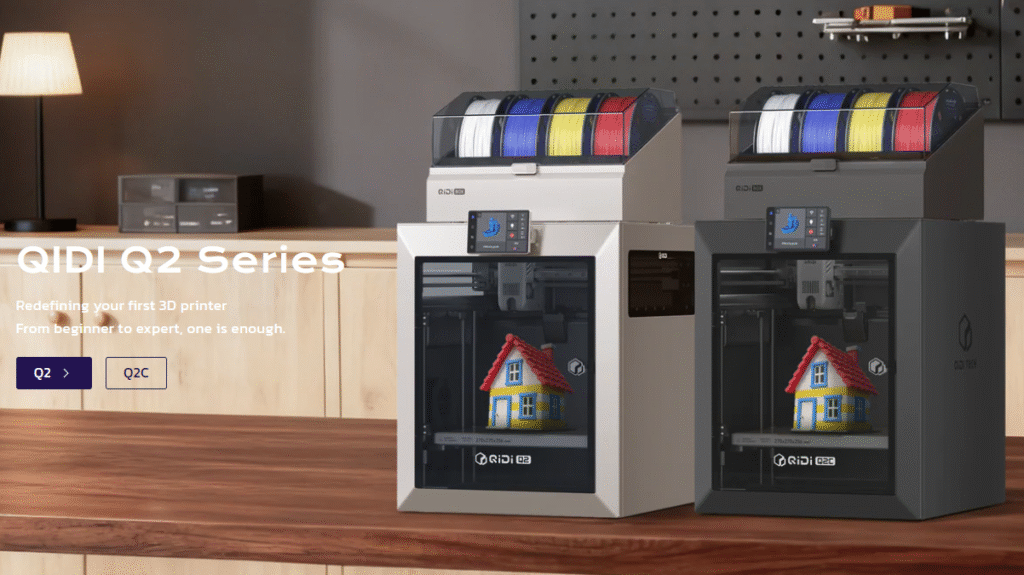
More recent machines (Plus series, Q-series, Max models, and similar) continue the emphasis on active heated chambers (commonly up to 65 °C), high nozzle temperatures, CoreXY kinematics, improved first-layer reliability, and optional multi-material systems. Exact dimensions, speeds, and feature sets should be confirmed on the current product pages.
Materials and Filament Support
QIDI printers are generally designed to print:
- Everyday materials: PLA, PETG, TPU
- Technical materials: ABS, ASA, nylon (PA), polycarbonate (PC)
- Reinforced options: carbon-fiber and glass-fiber composites (when equipped with hardened nozzles and hotends)
Many models support or ship with all-metal or multi-metal hotends and hardened nozzles suitable for abrasive filaments. Proper filament drying, chamber temperature management, and build-surface preparation remain important for consistent results. QIDI offers its own filament range, and third-party filaments are commonly used with adjusted profiles.
Software and Connectivity
QIDI provides its own slicing software (often referred to as QIDI Slicer or QIDI Print) with machine-specific profiles. Many users also successfully run Cura, Orca Slicer, or other open-source tools. Connectivity typically includes Wi-Fi, USB, and sometimes Ethernet. Firmware and software updates are distributed through official channels.
Buying Considerations for EU, USA, and UK Customers
- Regional shipping – Official and authorized stores frequently ship from local or regional warehouses, which can reduce delivery times and simplify customs handling.
- Warranty and support – Most machines include a limited warranty (commonly one year on major components) plus technical support. Confirm current terms before purchase.
- Space and power requirements – Larger models need adequate workspace and stable electrical supply. Enclosed designs help contain odors and temperature but still benefit from good ventilation.
- Matching the machine to the job – Choose primarily by required build volume, material range, and whether dual extrusion or multi-material capability is needed. Simpler single-extruder enclosed machines often suit beginners; users focused on engineering filaments tend to prioritize chamber heating and high-temperature hardware.
- Accessories – Replacement nozzles, extruders, build plates, and filament dryers are widely available.
Always verify the latest specifications, certifications, and regional compliance directly at https://qidi3d.com/ or through authorized retailers.
Frequently Asked Questions
What is QIDI Tech best known for?
Enclosed FDM printers that offer practical high-temperature capability and support for a broad range of filaments, including engineering materials.
Are QIDI printers suitable for beginners?
Many models arrive largely assembled with automatic leveling and clear interfaces. Basic knowledge of slicing, bed adhesion, and material handling still improves results.
Can QIDI machines print carbon-fiber filament?
Selected models (especially those marketed for CF use or fitted with hardened hotends and nozzles) are designed for carbon-fiber and similar abrasive materials when proper settings and maintenance are followed.
Do QIDI printers work with Cura or other slicers?
Yes. Official profiles exist for the company’s software, and community or manufacturer profiles are commonly used with Cura, Orca Slicer, and similar tools.
What is the main difference between the X-Max and X-Plus?
The X-Max family generally provides a larger build volume; the X-Plus sits in a mid-size category. Exact dimensions and features depend on the generation—check the specific model page.
Is dual extrusion available?
Yes on certain models such as selected i-Fast configurations and some earlier dual-extruder designs. Newer multi-material systems use external units on compatible printers.
Where should I buy official QIDI Tech products?
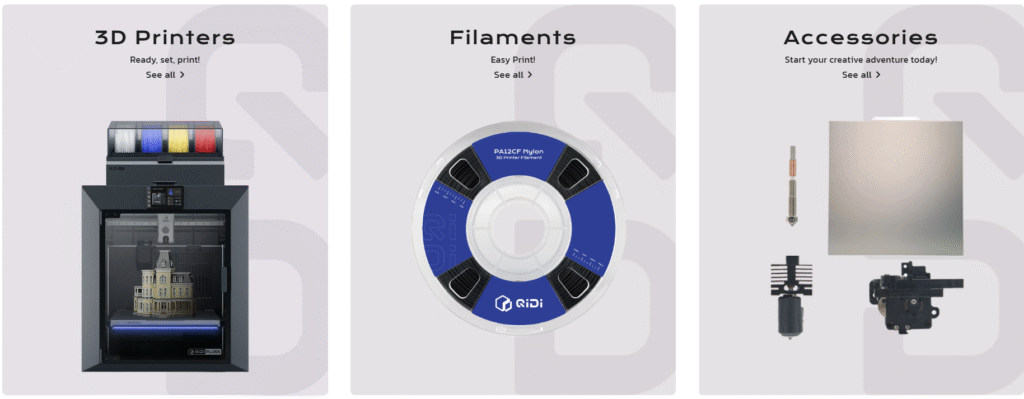
The primary source is the official website https://qidi3d.com/, which lists current printers, filaments, accessories, software, and support resources. Regional stores serve the US, EU, and UK markets.
Conclusion
QIDI Tech offers a practical range of enclosed FDM 3D printers aimed at users who need reliable temperature control and the ability to print beyond everyday PLA. From the widely searched X-Max, X-Plus, X-CF Pro, and i-Fast models to more recent high-speed machines with active chamber heating, the brand focuses on accessible engineering capability.
If you are evaluating a QIDI 3D printer for a home workshop, educational setting, or light production environment in the EU, USA, or UK, start by matching build volume, material requirements, and available space to the current lineup. Review official specifications, support options, and regional availability at https://qidi3d.com/ to make an informed decision.